Something quieter is happening at the edges of Web3 gaming. Most of the noise still circles fast payouts and short attention spans. But a smaller group of projects is asking players to slow down and commit. ScarQuest belongs to that group. It runs on BNB Chain and centres on land, factions, and a token economy that rewards patience. To see why that matters, look first at what players have grown used to.
The Quiet Shift From Instant Wins to Persistent Worlds in Web3 Gaming
For years, on-chain entertainment leaned on speed. Quick rounds, fast deposits, instant results — that became the default rhythm. Much of this culture grew next to casino-style platforms, where a session lasts minutes and a result lands in seconds. The appeal makes sense. It mirrors a wider pull toward short, easy loops across digital entertainment.
That style still has a clear audience. Platforms like oscar spin have built recognisable identities around quick reels, live tables, and gamified rewards, and they fit naturally into brief, self-contained sessions. A parallel current is now forming. Players who began with rapid spins are getting curious about games where progress builds over weeks. A decision in March can still matter in August. Owning digital assets becomes part of a longer story instead of a one-night result.
Inside ScarQuest What Makes a Strategy Driven Crypto Game Different
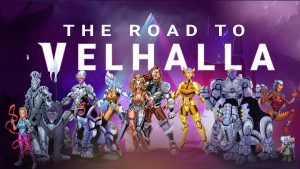
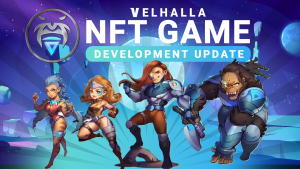
ScarQuest takes place in Velhalla, a planetary world where players manage land, command units, and join one of four factions. Gameplay mixes tower defence with deck-building, sitting on top of a deeper economy. Blockchain here is not a checkout system. It anchors ownership, identity, and the world itself. The result is a Web3 strategy game that asks players to think in seasons, not seconds.
Strategy games age well because they reward attention. The longer you stay, the more the world reveals — and that is something a single spin can never replicate.
A few traits shape the experience and set it apart from faster formats:
- A persistent map where land carries real strategic weight.
- Faction-based identity that shapes alliances and rivalries.
- Combat that combines offence, defence, and resource planning.
- NFT assets that hold meaning across seasons.
- A token economy built around earning through gameplay rather than chance.
- Cross-platform access on mobile and desktop for longer sessions.
None of this happened by accident. The team has refined the core loop across multiple development cycles. The published roadmap shows a steady move from closed alpha into open beta monetisation, with each phase tested before the next begins.
SCAR Tokens Land Ownership and the Mechanics Behind Real In Game Value
The SCAR token sits at the centre of the scarquest crypto economy. It is a BEP-20 asset that powers transactions inside Velhalla. Players use SCAR for staking, for trading NFTs on the in-game marketplace, and for fuelling the wider player economy. Land plots, characters, and collectibles all connect back to it. That gives the system a coherence that cosmetic in-game currencies often miss.
How Value Accrues Over Time
Value in ScarQuest does not appear in one dramatic moment. It builds slowly through choices that compound. A well-defended plot becomes a steady source of resources. A carefully built deck grows harder to beat as the season unfolds. Staking SCAR adds another layer, letting holders take part in the economy during quieter periods. This feels closer to managing a small digital estate than placing a bet.
| Element |
Function in the Game |
Type of Value |
| SCAR Token |
In-game currency and staking asset |
Economic |
| Land Plots |
Strategic position and resource generation |
Long-term |
| NFT Characters |
Combat units with unique abilities |
Functional and collectible |
| Marketplace |
Trading hub for assets between players |
Liquidity |
| Faction Membership |
Identity and alliance system |
Social and strategic |
The marketplace matters here. Time spent improving land or building a roster of characters has an exit route if a player ever wants one. Few entertainment formats offer that mix of play and tradable outcome.
Strategy Versus Chance Why Reward Loops Diverge Across the Digital Landscape
The contrast between strategy worlds and spin-based platforms is not really a contest. They serve different moods. A short session on a casino app fits a train ride. A campaign inside a Web3 strategy game feels closer to tending a garden or following a long-running show. Both have a place. The psychology behind them is simply different.
The most durable digital products are the ones that respect the player’s time twice — once when they arrive, and once when they return weeks later to find their progress intact.
A simple comparison makes the difference clearer:
| Aspect |
Spin-Based Crypto Entertainment |
Strategy-Based Web3 Gaming |
| Session length |
Seconds to minutes |
Hours, across weeks |
| Skill influence |
Low to moderate |
High |
| Asset persistence |
Typically none |
Ongoing |
| Community role |
Mostly individual |
Guilds, factions, alliances |
| Outcome driver |
Probability |
Decisions and planning |
This is not a criticism of either model. Quick-format entertainment is honest about what it offers, and many players enjoy it because it asks for very little. ScarQuest simply belongs to a different category. Here the reward is partly the gameplay and partly what a player builds along the way.
Where the Two Worlds Sometimes Meet
There are real overlaps. Both ecosystems use crypto wallets. Both rely on transparent on-chain records. Both have communities that share strategies and updates in the open. A player familiar with one usually moves comfortably into the other, even if their taste eventually settles on a single style.
What ScarQuest Signals About the Next Generation of Web3 Strategy Games
A few signals stand out when you look at how the project has grown. The team moves deliberately. Partnerships with established names in blockchain gaming have expanded. Comic-book NFT chapters extend the lore beyond the game. Closed beta phases on iOS, Android, and Steam point to a real ambition to compete with traditional mobile strategy titles, not only with other Web3 projects.
For players weighing where to spend their time, ScarQuest offers a thoughtful answer to a question the industry has quietly been asking. Can a crypto-native game hold attention the way a great strategy title holds attention, year after year? The early evidence says yes — as long as the developers keep gameplay as the foundation and the token as the support beam, not the other way around.
The strength of ScarQuest is not that it dismisses faster formats. It offers a different shape of engagement. In a digital landscape that often rewards speed first, a Web3 strategy game built around patience, planning, and persistent worlds feels like a quiet but meaningful counterweight. It is also a useful reminder that not every reward worth having arrives in a single moment.